The Thali: A Map of Place, Season and Appetite
Read a thali through its textures, regional examples and serving choices, then use those relationships to compose a thoughtful meal at home.
A place to begin
- A thali is best understood through relationships between dishes, rather than a compulsory bowl count.
- Gujarati thali, Kerala sadya and dal baati churma illustrate different regional meal structures.
- Seasonality should shape ingredient and preparation choices.
- Small first helpings, thoughtful refills and realistic quantities make generous meals more manageable.
In this guide
- Start with relationships rather than a dish count
- A Gujarati example: more than sweet and savoury
- A Kerala feast: the leaf is a different setting
- Other regional clues, without a rigid map
- Let season mean an actual ingredient decision
- Compose a home thali in a manageable order
- Serve for appetite and keep refills deliberate
- What a varied plate can and cannot tell you
- The best final question is about the next bite
A thali can make a meal legible at a glance. There is something to gather the other foods around, something moist, something substantial, and often a small sharp accompaniment that changes the next mouthful. Yet the arrangement is only the beginning. The pleasure lies in deciding what to combine, what to keep separate, and when a fresh spoonful of dal or a hot piece of bread makes the whole plate feel new again.
There is no single national thali with a compulsory number of bowls. A home lunch, a restaurant service and a festival feast answer different needs. Reading a thali well means noticing its setting and choices without turning one restaurant's presentation into a rule for millions of households. This guide offers a way to appreciate that variety and to compose a satisfying meal at home. It does not claim a first invention, a universal serving order or an automatically balanced diet.
Start with relationships rather than a dish count
A useful first question is what each component contributes. Rice or bread provides a base for other flavours. A dal or gravy offers moisture. A dry vegetable has a different rhythm from a soft curry. A pickle or chutney may be intense enough that a small amount changes several bites. A crisp component creates a contrast that disappears if everything is mixed together too soon. None of these roles demands a particular number of metal bowls.
Try imagining the meal with one component removed. If the only moist food disappears, will the remaining dishes feel dry together? If three rich dishes share the same texture, does another rich dish add much? This is a practical way to plan without chasing abundance. Six thoughtfully chosen components can offer more distinct experiences than a much larger collection that repeats the same seasoning, consistency and temperature. The point is a sequence of enjoyable mouthfuls, not an inventory photograph.
A Gujarati example: more than sweet and savoury
Gujarat Tourism describes a typical Gujarati thali through several families of preparation: farsan, vegetable shaak, cooked pulses, yogurt-based dishes, dal, rice or khichdi, breads and sweets. Its account also makes room for accompaniments and differences in texture. This is a useful regional reference, not a promise that every Gujarati meal contains every category. The word “typical” leaves room for household budgets, tastes, occasions and what is being cooked that day. [1]
To appreciate such a meal, compare small combinations. A piece of bread with a dry vegetable feels different from the same bread dipped into dal. A small amount of pickle changes that pairing again. Let a sweet element remain one voice among several rather than treating sweetness as a complete explanation of an entire cuisine. Ask what is in the bowls and how the cook expects them to meet. That question opens a better conversation than deciding whether a platter matches an imagined regional stereotype.
A Kerala feast: the leaf is a different setting
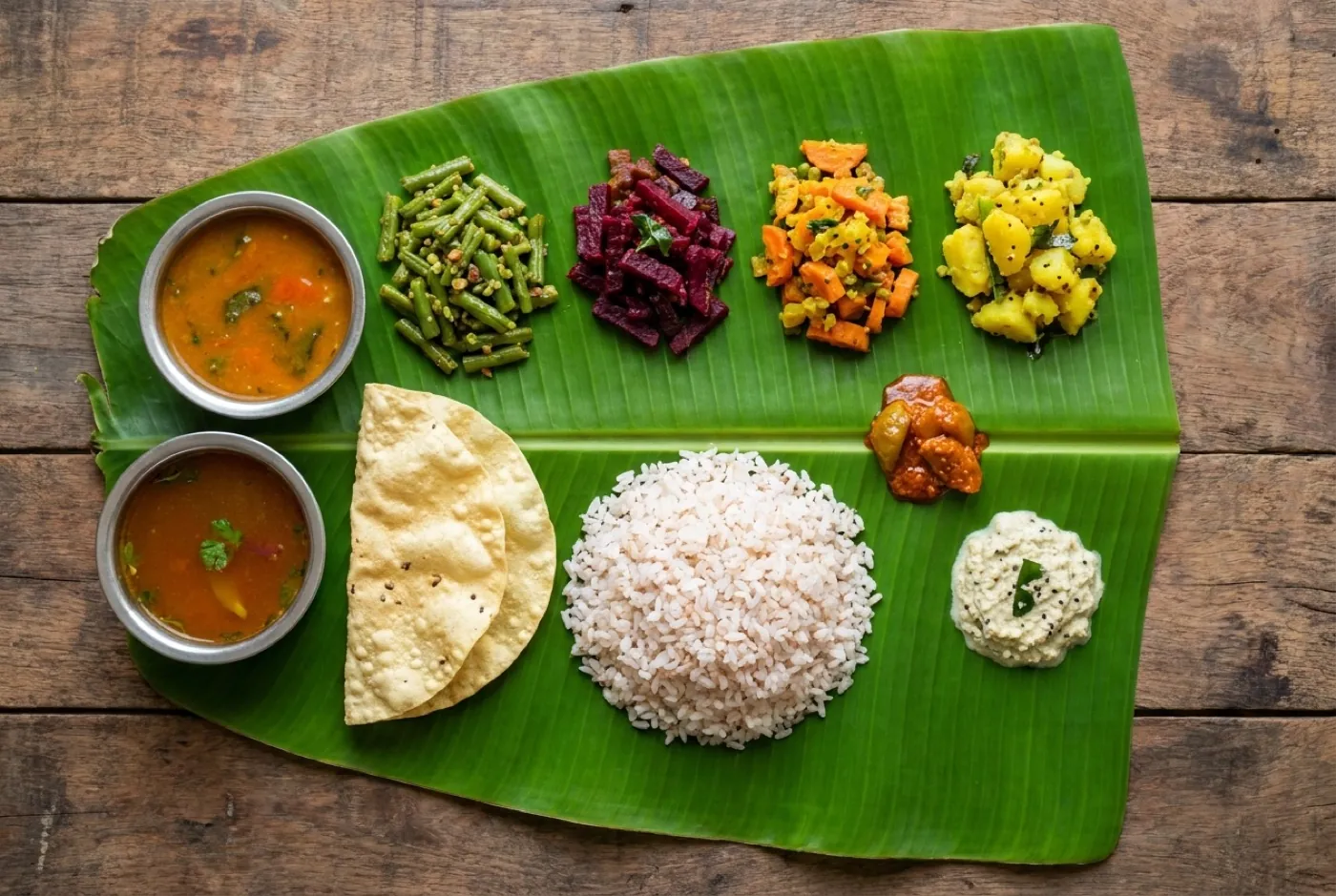
Kerala's sadya broadens the idea beyond a metal tray. Kerala Tourism describes a vegetarian feast traditionally served on a plantain leaf, with rice, varied vegetable preparations, pickles, savouries and payasam among its elements. Avial and thoran illustrate how vegetables can appear in distinctly different forms within the same meal. This is a particular feast tradition; it should not be used as a description of everything eaten in Kerala. [2]
A leaf service also reminds the diner that a meal unfolds over time. Some components may arrive before others, and freshly served rice changes the scale of a helping. Do not begin by mixing every item together. Ask the host or server about the local arrangement and follow their practical guidance. Different textures and sauces can then be explored deliberately. A small first serving is useful here because it allows attention to the food while leaving room for later courses or refills.
Other regional clues, without a rigid map
Rajasthan Tourism identifies dal baati churma as an important regional combination: lentils, wheat baati and a sweet crumb preparation. Even these three elements demonstrate an effective relationship between moist, firm and crumbly textures. Naming the combination accurately is more helpful than inventing a dramatic story about its first appearance. A regional plate can carry a recognisable culinary identity through a few central preparations, without needing an extravagant assortment around them. [3]
The Government of Maharashtra's Pune district describes meals featuring preparations such as amti, varan bhat, pithla bhakri and matki usal, and notes seasonal aamras puri in its culinary account. These examples provide another set of clues: the interaction of pulse preparations, rice or bread, and occasional seasonal additions. They are examples of a place's food vocabulary, not a fixed menu to impose on all Maharashtrian households. [4]
Let season mean an actual ingredient decision
Calling a plate seasonal should involve more than placing a leaf next to its title. Ask which ingredient was selected because it was available and suitable, which dish makes good use of it and which other components now need adjustment. A juicy fruit-based preparation may change how much sweetness is wanted elsewhere. A substantial vegetable dish may make a second heavy preparation unnecessary. Seasonality becomes useful when it shapes the meal rather than decorating its description.
At home, begin with the vegetable or ingredient you most want to cook. Choose a preparation that suits its texture, then build the rest of the meal around it. If the vegetable is dry, consider what will provide moisture. If it is strongly seasoned, leave space for a quieter dal or plain rice. These are composition choices, not regional laws. They allow a meal to respond to what is in the kitchen while remaining coherent.
Compose a home thali in a manageable order
Choose the central pairing first: for example, rice and dal, or bread and a vegetable preparation. Add another component only when it contributes something distinct. A second vegetable might bring a firmer bite; a small chutney might bring acidity; a spoonful of yogurt might be welcome if it suits the rest of the meal and the eaters' requirements. These examples are culinary suggestions rather than a personalised nutrition prescription.
Then work backwards from serving time. Decide which item needs the last few minutes at the stove and which can be prepared earlier using appropriate storage. One freshly finished component can make a simple lunch feel especially considered. Trying to finish many different hot dishes simultaneously can reduce the quality of all of them. A practical meal plan accounts for burner space, pans, washing-up and the person cooking, as well as the number of eaters.
Serve for appetite and keep refills deliberate
Small first portions are particularly useful when the meal offers several distinct foods. The diner can return to a favourite without accepting large unwanted helpings of everything else. Ask before refilling. An empty bowl might mean enjoyment, but it might also mean the eater has had enough of that dish. Warm hospitality can include listening carefully to a refusal instead of making fullness a condition of appreciation.
For home planning, count likely portions rather than simply multiplying the number of dishes by the number of people. FSSAI's household food-waste guidance recommends planning meals, using shopping lists, buying realistic quantities and putting foods into appropriate storage promptly. A thali can follow that logic: prepare reasonable amounts, keep unserved food separate, and arrange storage rather than leave an attractive spread standing indefinitely. [5]
What a varied plate can and cannot tell you
Colour and variety are useful things to notice, but the number of bowls cannot reveal every ingredient or portion. Several bowls might contain closely related ingredients; a single dish may contain a much broader mixture. Ask about oil, dairy, nuts, wheat or other ingredients when they matter to you. A vegetarian label does not answer every dietary question, and a small visible garnish may not disclose what is inside a sauce.
Likewise, describe a thali with precision when writing about it. Record the place, occasion, actual dishes and what was served, rather than awarding it the title of a complete representation of a state. Separate a documented regional association from an origin claim. A useful food description tells the reader what to expect and what remains variable. It does not need a sweeping claim about ancient wisdom to make a plate worth understanding.
The best final question is about the next bite
As you eat, notice how combinations change: dry beside moist, plain beside intense, soft beside crisp. Allow a favourite pairing to repeat. There is no obligation to maximise the number of combinations or finish every accompaniment. A good meal can be generous without being excessive and regional without being frozen into one template. The thali is most rewarding when its many possible parts remain in conversation with the appetite of the person eating it.
Common questions
Is there a correct number of dishes in a thali?
There is no single national number. Household lunches, restaurant menus and ceremonial feasts have different compositions.
Is a Kerala sadya the same as every Kerala meal?
No. Sadya is a particular vegetarian feast tradition; Kerala has a wider range of household and regional foods.
How can I plan a small home thali?
Choose a central pairing, add components with distinct roles, and plan serving around your equipment and appetite. Variety need not mean a large quantity of every dish.
Does a large number of bowls guarantee a balanced meal?
No. Ingredients, preparation and portions matter. A visually varied platter cannot by itself establish the nutritional composition of a meal.
Sources and further reading
A sourced culinary guide; techniques are explanatory rather than a claim of recipe testing.
- Gujarati Thali — Gujarat Tourism, Government of Gujarat · checked 2026-10-27
- Sadya — Kerala Tourism, Government of Kerala · checked 2026-10-27
- Rajasthani Cuisine — Department of Tourism, Government of Rajasthan · checked 2026-10-27
- Culture & Heritage — Pune — District Pune, Government of Maharashtra · checked 2026-10-27
- Guidelines for Home — FSSAI — Indian Food Sharing Alliance · checked 2026-10-27