Butter Chicken: The Accident That Conquered the World
Take it apart and it's just tomato, butter, cream and smoke. Put it together and it's the most famous Indian dish on Earth. So — khaane mein kya hai?
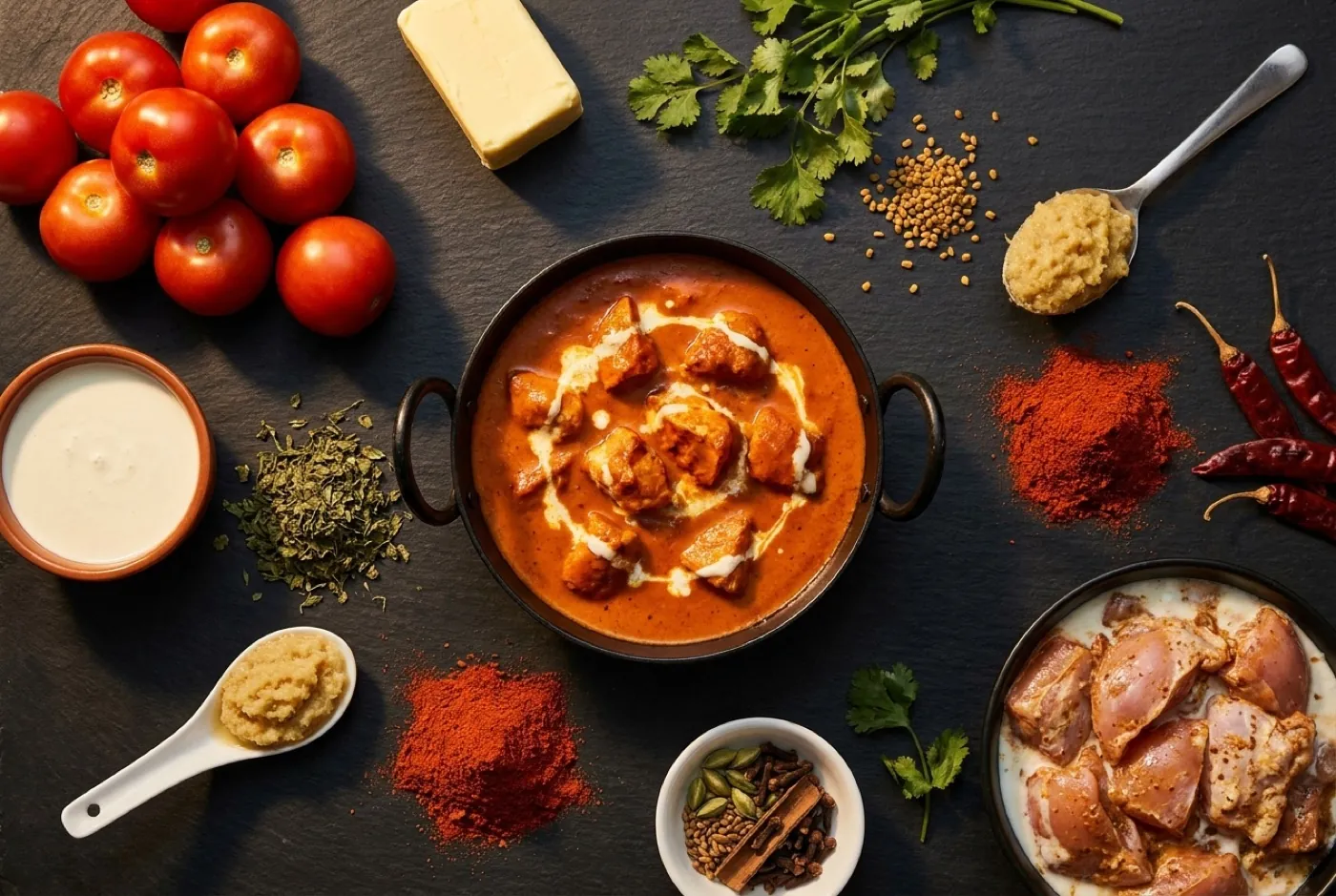
Khaane mein kya hai — the short answer
- Tandoori chicken — yogurt-and-spice marinated, cooked over fierce heat for char and smoke.
- The makhani gravy — slow-cooked tomatoes, butter, cream, a little sweetness.
- The signature — kasuri methi (dried fenugreek), the haunting bittersweet note that makes it unmistakable.
Every legendary dish has an origin story, and butter chicken's is beautifully unglamorous: leftovers. The story goes back to old Delhi's Moti Mahal in the years after Partition, where cooks facing unsold tandoori chicken — which dries out as it sits — began reviving it in a gravy of tomatoes, butter and cream. The rescue mission turned out better than the original. Murgh makhani was born, and the world has never recovered.
Part one: the chicken
Real butter chicken starts a day early. The chicken is marinated twice — first in lemon and salt, then in a thick coat of hung curd, ginger-garlic paste, red chilli and garam masala — and then cooked hard and fast in a tandoor. This matters more than any other step: the char, the smoke, the slightly burnt edges are the backbone that keeps the dish from being merely creamy. A pale, poached chicken in orange gravy is not butter chicken; it is a missed opportunity wearing its clothes.
Part two: the gravy
The makhani base is patience disguised as luxury. Ripe tomatoes are cooked down slowly — with butter, a little ginger and garlic, Kashmiri chilli for colour more than fire — until they surrender their rawness and turn velvet. Then cream, then more butter, then the finishers: a spoon of honey or sugar to round the acidity, garam masala, and the hero — kasuri methi, dried fenugreek leaves crushed between your palms. That faint bittersweet haunting is the fingerprint of every great butter chicken. Miss it, and something is missing you can't name.
Butter chicken is not a curry. It is tandoori chicken that fell into velvet and decided to stay.
Why it works
Dissected, it's a masterclass in balance: smoke against cream, acid against sweet, bitter methi against rich butter. Nothing shouts. Everything hums. It's also why the dish travels so well — there's no unfamiliar edge to frighten a first-timer, just warmth stacked on warmth. Purists argue about how much cream is too much (answer: when you can no longer taste tomato), but the formula is forgiving, which is how it ended up on menus from Toronto to Tokyo.
Eat it like you mean it
With butter naan, obviously — the only bread engineered for this gravy — and raw onion rings and a wedge of lime to cut the richness. And if you're near Daman, you already know my spot: the dhaba-style version at Veera Da Dhaba, mopped up with a hot paratha under a village-themed roof.
Quick answers
What is butter chicken made of?
Tandoor-cooked marinated chicken in a gravy of slow-cooked tomatoes, butter and cream, finished with kasuri methi and garam masala. The marinade is yogurt, ginger-garlic and spices.
What's the difference between butter chicken and tikka masala?
They're cousins. Butter chicken (Delhi) is smoother, sweeter, butter-forward. Chicken tikka masala (popularised in Britain) is typically spicier and more onion-masala driven. Same skeleton, different accents.